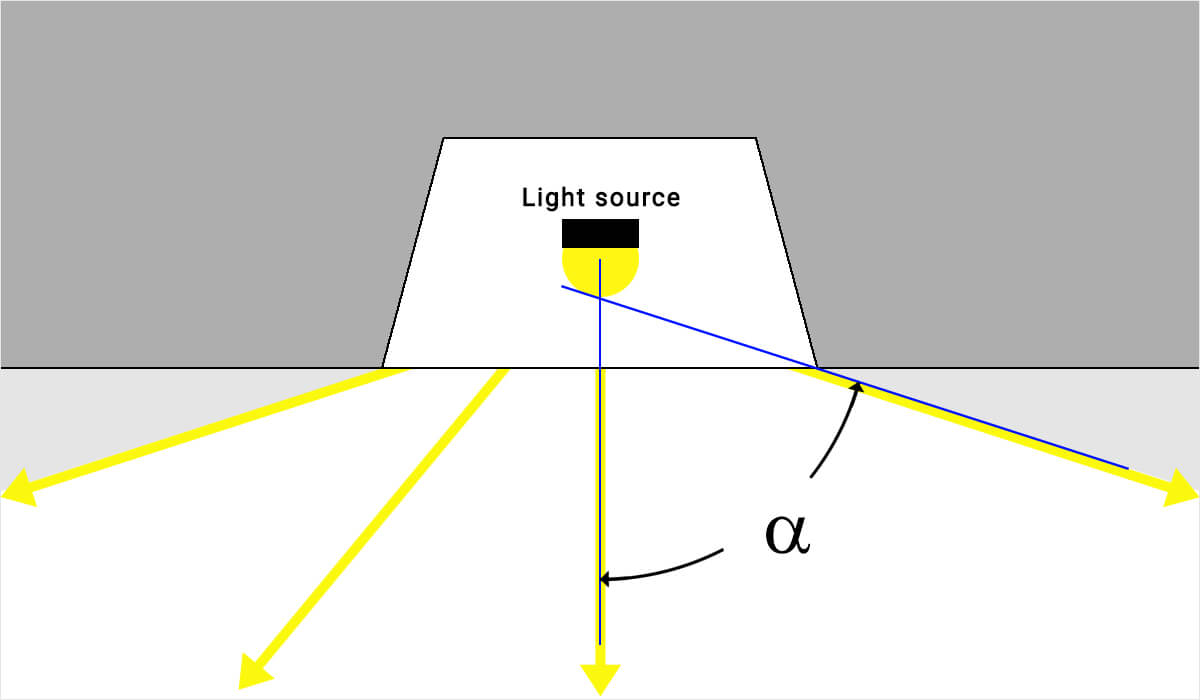
Upper Shielding Angle:
The upper shielding angle refers to the angle between the horizontal plane and the line of sight, under which the luminous parts of the light source in a luminaire become just visible. This angle is crucial for limiting glare from direct view of the luminaire. DIN EN 12464-1 defines this angle and ensures that light sources are optimally shielded under this angle to prevent glare. Especially for luminaires with high luminance, such as LED lights, it is important to maintain a sufficient upper shielding angle to limit the directly visible luminance.Minimum Shielding Angle according to DIN EN 12464-1
| Luminance [kcd/m²] | Minimum Shielding Angle [α] |
| 20 to < 50 | 15° |
| 50 to < 500 | 20° |
| ≥ 500 | 30° |
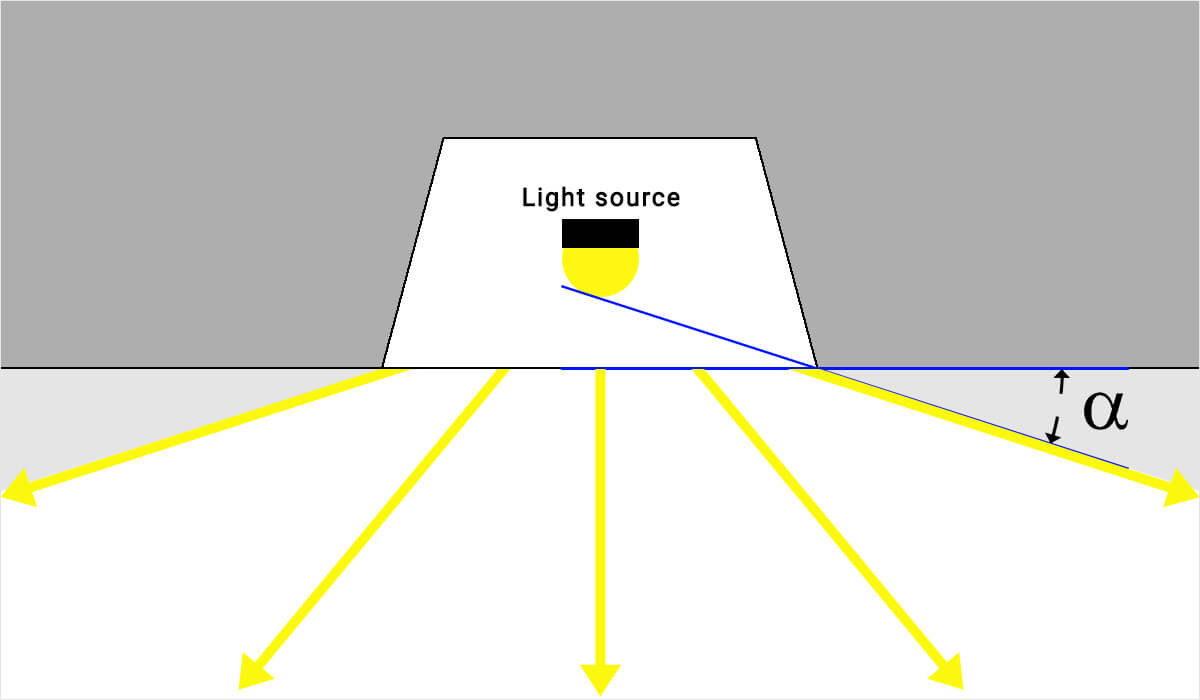
Lower Shielding Angle:
The lower shielding angle is defined by DIN EN 12665 as the angle between a vertical line through the light source and the direction from which the light source is just no longer visible. This angle is especially important for downlights with high luminance. Here, it is essential to ensure that the light source is not directly visible from unwanted viewing angles to avoid glare. One solution for this is the use of darklight reflectors, where the light source is deeply recessed into a reflector, preventing direct visibility.