




WICOP LEDs
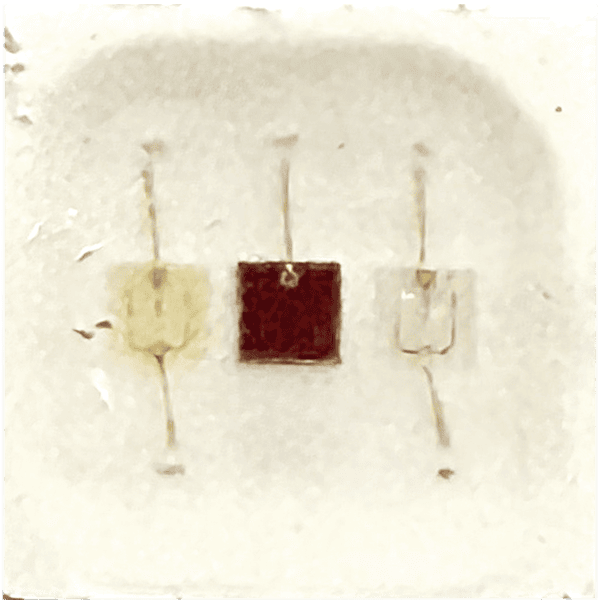
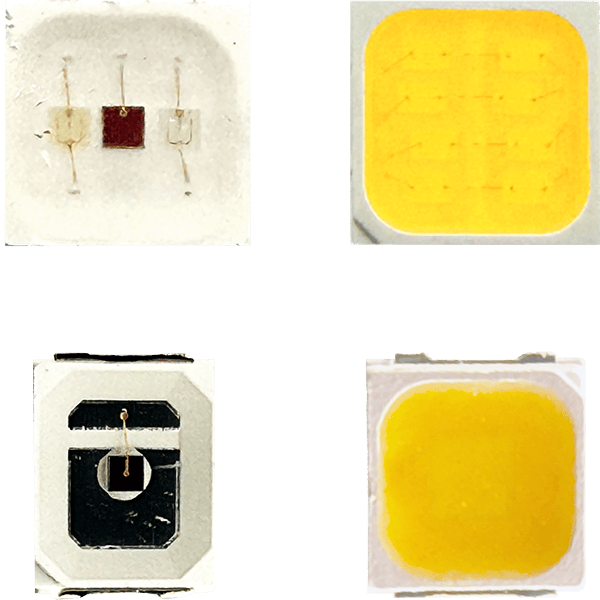
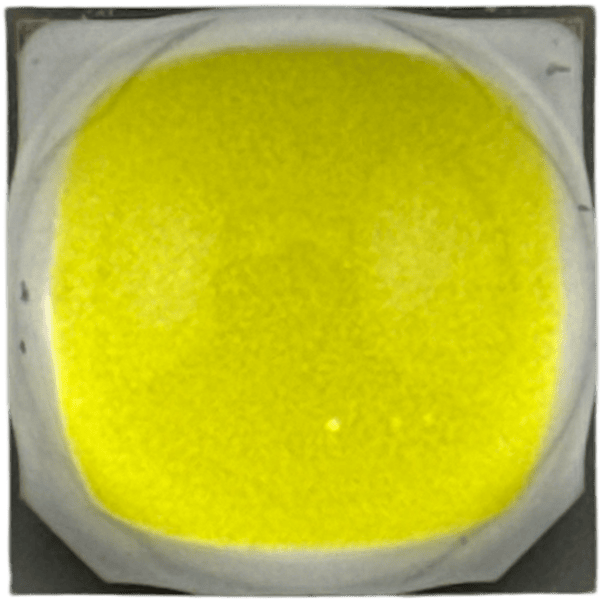
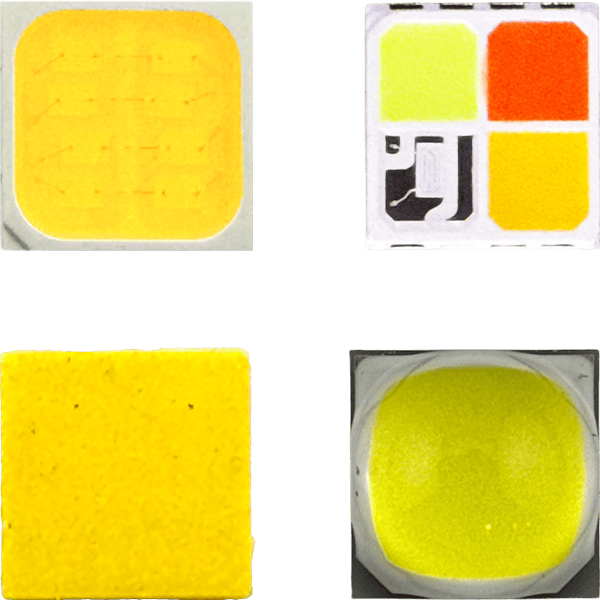
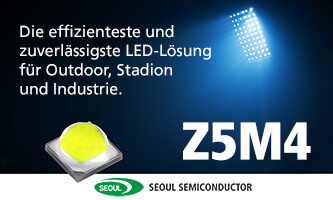
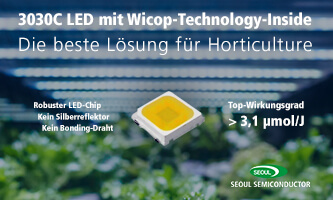
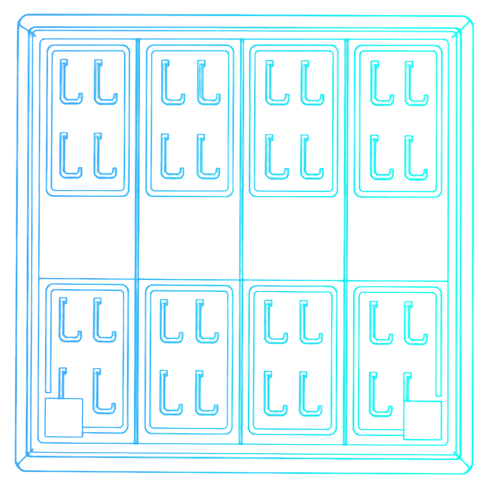
WICOP LEDs from Seoul Semiconductor are true package-free LEDs with high lumen density and excellent color uniformity. The LED chip is soldered directly onto the circuit board, reducing thermal resistance. The absence of bond wires increases reliability. This makes WICOP LEDs ideal for industrial, transportation, and display applications.
|
|
||||||||||||||||||||
|---|---|---|---|---|---|---|---|---|---|---|---|---|---|---|---|---|---|---|---|---|
| Seoul Semiconductor | SZ8 | Cool White | 6500 K | 70 | 16534 mcd | 77 lm | 183 lm/W | 0.42 W | 2.8 V | 150 mA | 700 mA | 150 ° | No | 1.14 mm | 1.14 mm | 0.46 mm | -40 °C | 125 °C | SMD Y11 | |
| Seoul Semiconductor | SZ8 | Cool White | 5700 K | 70 | 16534 mcd | 77 lm | 183 lm/W | 0.42 W | 2.8 V | 150 mA | 700 mA | 150 ° | No | 1.14 mm | 1.14 mm | 0.46 mm | -40 °C | 125 °C | SMD Y11 | |
| Seoul Semiconductor | SZ8 | Cool White | 5000 K | 70 | 16534 mcd | 77 lm | 183 lm/W | 0.42 W | 2.8 V | 150 mA | 700 mA | 150 ° | No | 1.14 mm | 1.14 mm | 0.46 mm | -40 °C | 125 °C | SMD Y11 | |
| Seoul Semiconductor | SZ8 | Cool White | 6500 K | 80 | 13743 mcd | 64 lm | 158 lm/W | 0.42 W | 2.8 V | 150 mA | 700 mA | 150 ° | No | 1.14 mm | 1.14 mm | 0.46 mm | -40 °C | 125 °C | SMD Y11 | |
| Seoul Semiconductor | SZ8 | Cool White | 5700 K | 80 | 13743 mcd | 64 lm | 158 lm/W | 0.42 W | 2.8 V | 150 mA | 700 mA | 150 ° | No | 1.14 mm | 1.14 mm | 0.46 mm | -40 °C | 125 °C | SMD Y11 | |
| Seoul Semiconductor | SZ8 | Cool White | 5000 K | 80 | 13743 mcd | 64 lm | 152 lm/W | 0.42 W | 2.8 V | 150 mA | 700 mA | 150 ° | No | 1.14 mm | 1.14 mm | 0.46 mm | -40 °C | 125 °C | SMD Y11 | |
| Seoul Semiconductor | SZ8 | Cool White | 5000 K | 80 | 13743 mcd | 64 lm | 152 lm/W | 0.42 W | 2.8 V | 150 mA | 700 mA | 150 ° | No | 1.14 mm | 1.14 mm | 0.46 mm | -40 °C | 125 °C | SMD Y11 | |
| Seoul Semiconductor | SZ8 | Cool White | 6500 K | 80 | 28560 mcd | 133 lm | 133 lm/W | 1.04 W | 9 V | 115 mA | 230 mA | 150 ° | No | 1.14 mm | 1.14 mm | 0.46 mm | -40 °C | 125 °C | SMD Y11 | |
| Seoul Semiconductor | SZ8 | Cool White | 5700 K | 90 | 28560 mcd | 133 lm | 133 lm/W | 1.04 W | 9 V | 115 mA | 230 mA | 150 ° | No | 1.14 mm | 1.14 mm | 0.46 mm | -40 °C | 125 °C | SMD Y11 | |
| Seoul Semiconductor | SZ8 | Cool White | 6500 K | 90 | 12025 mcd | 56 lm | 124 lm/W | 0.45 W | 3 V | 150 mA | 700 mA | 150 ° | No | 1.14 mm | 1.14 mm | 0.46 mm | -40 °C | 125 °C | SMD Y11 | |
| Seoul Semiconductor | SZ8 | Cool White | 5600 K | 90 | 12025 mcd | 56 lm | 124 lm/W | 0.45 W | 3 V | 150 mA | 700 mA | 150 ° | No | 1.14 mm | 1.14 mm | 0.46 mm | -40 °C | 125 °C | SMD Y11 | |
| Seoul Semiconductor | SZ8 | Cool White | 5000 K | 90 | 12025 mcd | 56 lm | 124 lm/W | 0.45 W | 3 V | 150 mA | 700 mA | 150 ° | No | 1.14 mm | 1.14 mm | 0.46 mm | -40 °C | 125 °C | SMD Y11 | |
| Seoul Semiconductor | SZ8 | Cool White | 6500 K | 90 | 21903 mcd | 102 lm | 102 lm/W | 1.04 W | 9 V | 115 mA | 230 mA | 150 ° | No | 1.14 mm | 1.14 mm | 0.46 mm | -40 °C | 125 °C | SMD Y11 | |
| Seoul Semiconductor | SZ8 | Cool White | 5700 K | 90 | 21903 mcd | 102 lm | 102 lm/W | 1.04 W | 9 V | 115 mA | 230 mA | 150 ° | No | 1.14 mm | 1.14 mm | 0.46 mm | -40 °C | 125 °C | SMD Y11 | |
| Seoul Semiconductor | SZ8 | Natural White | 4000 K | 80 | 13743 mcd | 64 lm | 152 lm/W | 0.42 W | 2.8 V | 150 mA | 700 mA | 150 ° | No | 1.14 mm | 1.14 mm | 0.46 mm | -40 °C | 125 °C | SMD Y11 | |
| Seoul Semiconductor | SZ8 | Natural White | 4000 K | 80 | 26841 mcd | 125 lm | 124 lm/W | 1.01 W | 8.8 V | 115 mA | 230 mA | 150 ° | No | 1.14 mm | 1.14 mm | 0.46 mm | -40 °C | 125 °C | SMD Y11 | |
| Seoul Semiconductor | SZ8 | Natural White | 4000 K | 90 | 12025 mcd | 56 lm | 133 lm/W | 0.42 W | 2.8 V | 150 mA | 700 mA | 150 ° | No | 1.14 mm | 1.14 mm | 0.46 mm | -40 °C | 125 °C | SMD Y11 | |
| Seoul Semiconductor | SZ8 | Natural White | 4000 K | 90 | 21903 mcd | 102 lm | 101 lm/W | 1.01 W | 8.8 V | 115 mA | 230 mA | 150 ° | No | 1.14 mm | 1.14 mm | 0.46 mm | -40 °C | 125 °C | SMD Y11 | |
| Seoul Semiconductor | SZ8 | Warm White | 3000 K | 70 | 14602 mcd | 68 lm | 162 lm/W | 0.42 W | 2.8 V | 150 mA | 700 mA | 150 ° | No | 1.14 mm | 1.14 mm | 0.46 mm | -40 °C | 125 °C | SMD Y11 | |
| Seoul Semiconductor | SZ8 | Warm White | 2700 K | 70 | 14602 mcd | 68 lm | 162 lm/W | 0.42 W | 2.8 V | 150 mA | 700 mA | 150 ° | No | 1.14 mm | 1.14 mm | 0.46 mm | -40 °C | 125 °C | SMD Y11 | |
| Seoul Semiconductor | SZ8 | Warm White | 3500 K | 80 | 13743 mcd | 64 lm | 170 lm/W | 0.42 W | 2.8 V | 150 mA | 700 mA | 150 ° | No | 1.14 mm | 1.14 mm | 0.46 mm | -40 °C | 125 °C | SMD Y11 | |
| Seoul Semiconductor | SZ8 | Warm White | 3000 K | 80 | 12884 mcd | 60 lm | 143 lm/W | 0.42 W | 2.8 V | 150 mA | 700 mA | 150 ° | No | 1.14 mm | 1.14 mm | 0.46 mm | -40 °C | 125 °C | SMD Y11 | |
| Seoul Semiconductor | SZ8 | Warm White | 2700 K | 80 | 12884 mcd | 60 lm | 143 lm/W | 0.42 W | 2.8 V | 150 mA | 700 mA | 150 ° | No | 1.14 mm | 1.14 mm | 0.46 mm | -40 °C | 125 °C | SMD Y11 | |
| Seoul Semiconductor | SZ8 | Warm White | 3000 K | 80 | 24909 mcd | 120 lm | 119 lm/W | 1.01 W | 8.8 V | 115 mA | 230 mA | 150 ° | No | 1.14 mm | 1.14 mm | 0.46 mm | -40 °C | 125 °C | SMD Y11 |
Our
manufacturer
Frequently asked questions about
WICOP LEDs
The questions on this page come from conversations with engineers designing a component in and with buyers who need to replace an existing type. They range from the basics to the details that show what really matters during selection. Whatever remains open we clarify for your specific case: tell us your target values – we narrow down the eligible series and give you price, availability and samples for your quantity.
01
What are WICOP LEDs?
WICOP LEDs are package-free high-power LEDs from Seoul Semiconductor: the light-emitting chip is soldered straight onto the circuit board, with no conventional package and no bond wires. WICOP stands for "Wafer Integrated Chip on PCB". The phosphor layer is applied directly onto the chip at wafer level, so the light-emitting surface is close to the chip size itself – giving very high luminous density in a minimal footprint. Neumüller stocks WICOP LEDs in four series, with luminous flux from about 46 to over 1,200 lm and colour temperatures from 2,200 to 6,500 K.
02
How does WICOP technology work?
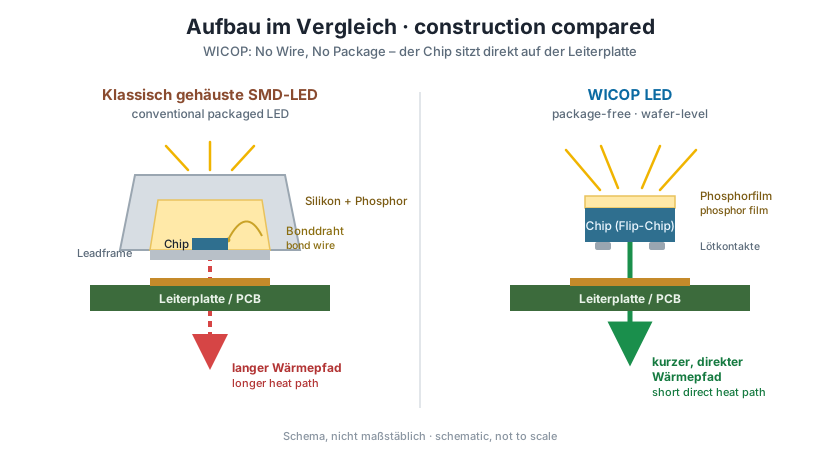
WICOP technology drops two components that define a conventional LED: the package and the bond wires used for contacting. Seoul Semiconductor calls the principle "No Wire, No Package". The chip is mounted flip-chip, contacts facing down, directly onto the circuit board, and the phosphor sits as a thin film right on top of the chip. Because the heat path does not run through a package and lead frame, thermal resistance drops sharply; removing the bond wires also removes a typical point of failure. This yields very low profiles, starting at roughly 0.4 mm.
03
How do WICOP LEDs differ from packaged LEDs and from CSP LEDs?
The difference lies mainly in the package that has been left out. A conventional SMD LED (for example a 2835 or 3030) sits in a plastic body with a reflector cavity and is contacted by bond wires; the WICOP LED omits both, shrinking footprint, thermal resistance and stray losses. Against an ordinary chip scale package (CSP), Seoul positions WICOP as its own wafer-based generation, where contacting and phosphor are formed at wafer level and the light-emitting surface stays close to the chip size. For designers this means higher luminous density and better thermal coupling, but also more demanding assembly than with robust packaged types.
04
Which WICOP series does Neumüller stock and how do I choose the right one?
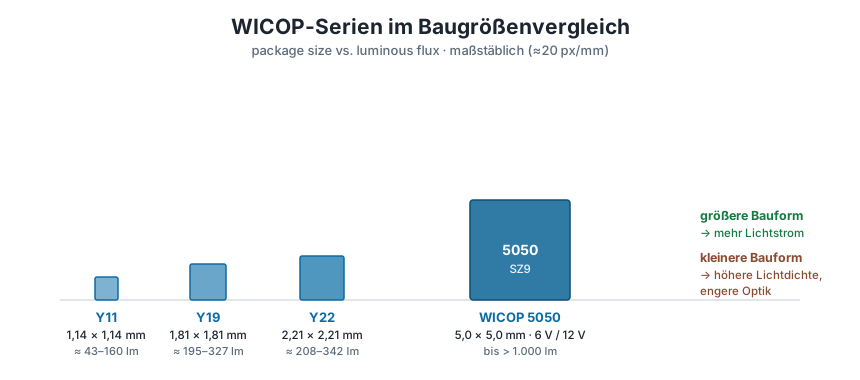
Neumüller stocks four WICOP series that differ mainly in package size and luminous flux:
- WICOP-Y11 (1.14 × 1.14 mm) – smallest package, for single spots and the highest luminous density
- WICOP-Y19 (1.81 × 1.81 mm) and WICOP-Y22 (2.21 × 2.21 mm) – mid-size high-output point sources
- WICOP 5050 (SZ9, 5.0 × 5.0 mm, 6 V / 12 V) – highest luminous flux, over 1,000 lm
Rule of thumb: choose the smallest package for tight optics and high luminous density, a larger package when flux and heat dissipation come first. The exact bin choice of flux, colour temperature and CRI is given in each series datasheet.
05
Which parameters matter most for WICOP LEDs?
Besides luminous flux, colour temperature and CRI, the thermal parameters are the decisive ones for WICOP LEDs:
- Thermal resistance Rth(J–S) – roughly 0.45 K/W on the 5050 up to about 10 K/W on the small Y11
- Maximum junction temperature Tj – 125 to 150 °C depending on series
- Permissible forward current, and the power density that follows from it
Add to these the viewing angle (130–150°), the MacAdam colour binning (3, 5 or 7 step) and the ESD rating (Class 2 per JEDEC, the 5050 with an integrated protection diode). Check every limit in the datasheet before design-in.
06
What role does thermal resistance play – and where is the trade-off?
The low thermal resistance is WICOP's core advantage, but it comes with a trade-off. Because chip and circuit board are coupled without a package, heat flows straight into the copper; on the large 5050, Rth(J–S) reaches about 0.45 K/W. The flip side: the tiny footprint of the small Y types concentrates power onto a few square millimetres and keeps their resistance higher (Y11 about 10 K/W), so they reach the Tj limit quickly without an adequately sized copper area or a metal-core board. High currents are only permissible with robust thermal management.
07
What does the wide 130 to 150° viewing angle mean for the optical design?
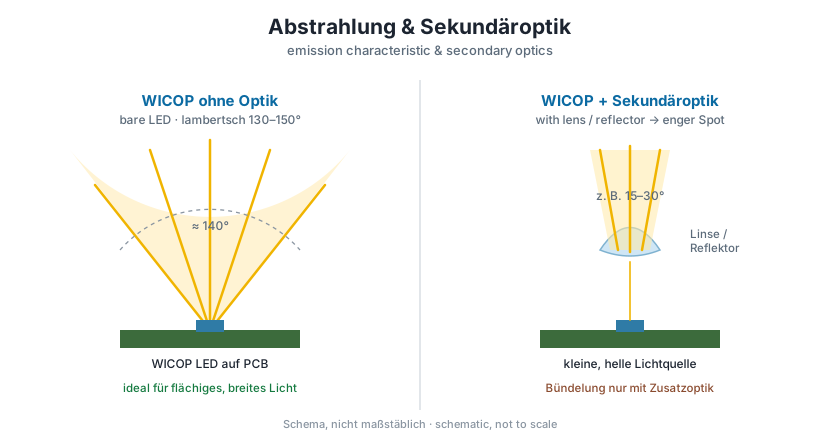
The wide viewing angle follows directly from the package-free construction: with no reflector cavity, the chip surface emits almost Lambertian. For wide, area-filling applications this is ideal, because light exits evenly and without package shadowing. Anyone needing a narrow spot or a directed beam profile must add secondary optics – a lens or reflector – since the LED itself does not collimate. The upside for beam forming is the small, bright source: a chip-sized surface lets compact optics shape a clean beam. Secondary optics, however, add build height and cost.
08
Are WICOP LEDs suitable for automotive applications?
For automotive applications, the WICOP LEDs stocked by Neumüller are not intended: the range is aimed at general lighting, industry and lighting design. Seoul Semiconductor does use WICOP technology in automotive-qualified components, but AEC-Q102 qualified automotive LEDs are not part of the Neumüller portfolio. For vehicle applications with their qualification and documentation requirements, this product line is therefore not the right route. The Y11, Y19, Y22 and 5050 series are general-lighting types; their ratings and reliability evidence (LM-80, RoHS) relate to lighting applications.
09
In which applications are WICOP LEDs worthwhile – and when are they not?
WICOP LEDs pay off wherever high luminous density from a small area and good heat dissipation are needed. Typical applications:
- spots and directional luminaires with a defined beam
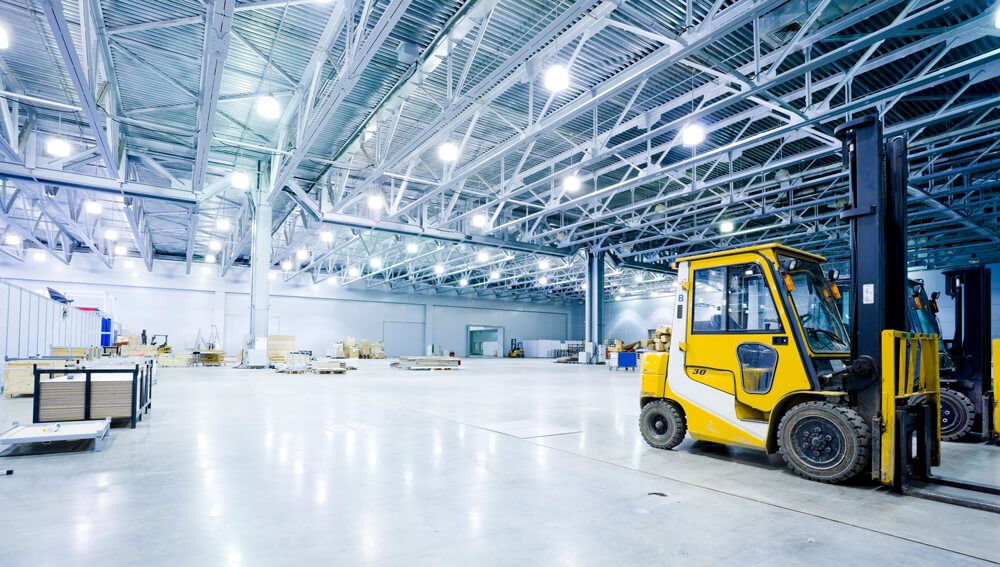
- industrial and high-bay lighting, downlights
- flood and street lighting
- compact high-output luminaires and torches
They are less worthwhile in simple, large-area low-cost applications with low power density – there, robust packaged standard LEDs are cheaper and more forgiving to assemble. Without a solid thermal and board design, WICOP cannot play to its strengths either.
10
What should I consider when designing in and soldering WICOP LEDs?
WICOP LEDs are reflow soldered and handled like sensitive CSP components. Key points:
- Moisture sensitive (MSL 2), reflow at most twice
- Placement only with a vacuum nozzle, never tweezers – no pressure on the silicone surface
- Thermal design: enough copper area or a metal-core board
- Solder-pad layout, reflow profile (peak around 250–260 °C) and depaneling per datasheet
A visual and a functional check are advisable after soldering. Every limit and layout recommendation is in the respective series datasheet.
Services
We support you in every phase of your project. From the initial idea to series production, we accompany you with expertise, state-of-the-art technology, and customized solutions.

Why customers rely on us
For decades, we have been supporting our customers with tailor-made solutions, technical expertise, and personal service. This trust forms the basis for successful, long-term partnerships.
Customized solutions
Whether standard or custom solutions -
we deliver exactly what you need.
All in One
Distribution, development, production -
comprehensive service from a single source.
Innovative Technologies
Future technologies in use
for modern solutions with vision.
Personal project support
Reliable support right from the start -
on site, via call, or by phone.
Years of experience
Successful on the market since 1952
with in-depth industry expertise.
Network
Manufacturer expertise directly available
for development, innovation & optimization
Integration Level
High system integration with a concept
for efficiency and reduced complexity.
Technical expertise
Know-how and experience combined
for sustainable electronics solutions.
Sustainable
Responsible and resource-conscious
selection of components and supply chains.
Framework agreements
Predictable prices and supply -
tailored to your individual needs.
9001:2015
Certified processes for maximum
safety, quality, and compliance.
Logistics solutions
Kanban, consignment, min-max, and more
for availability and less inventory.
Customers who
trust us.
Latest News on WICOP LEDs
Stay up to date with the latest product news, technical innovations, and trends in the field of WICOP LEDs.


